admin@raktdaan.app
RAKTDAAN
  • Home
  • Register
  • Donor Login
  • Find a Donor
  • Request Blood
  • Blood Stock
  • Find a Camp
  • About Us
  • Why Donate?
  • Blog
Contact Us

What Is Thalassemia? Causes, Symptoms, Treatment and the Importance of Blood Donation

Home / Awareness/ Thalassemia / What Is Thalassemia? Causes, Symptoms, Treatment and the Importance of Blood Donation
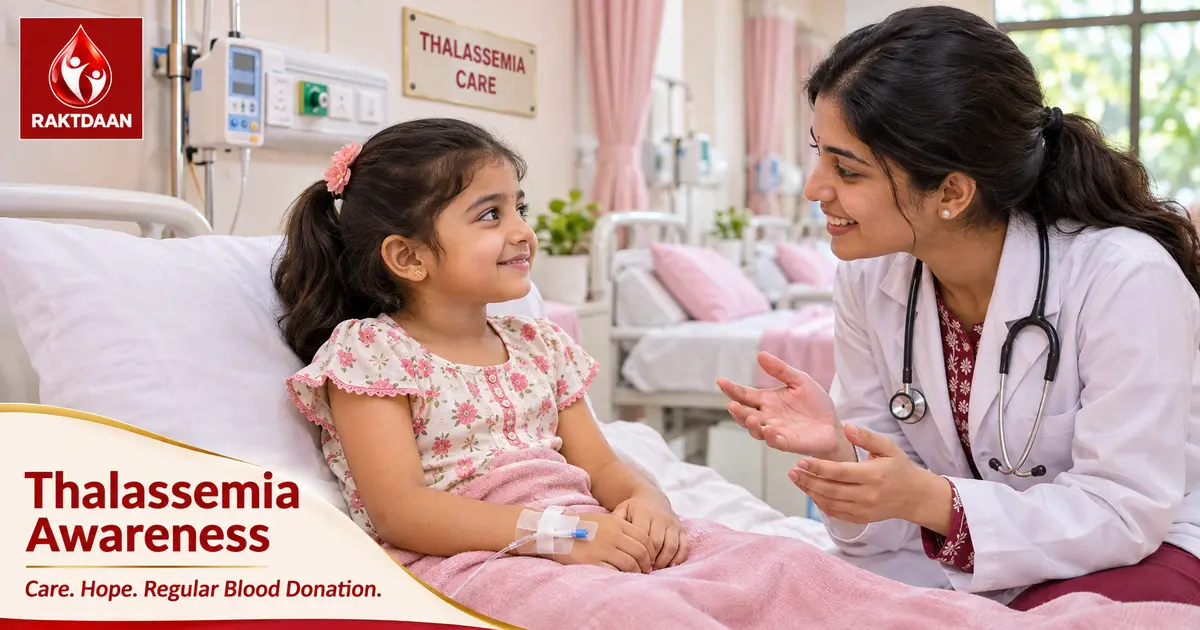
A young girl with a cannula in her hand talking to a doctor in a thalassemia care ward,
NARESH SHARMA

NARESH SHARMA

November 5, 2026
0 Comments

Categories: Awareness, Thalassemia

Share
facebook.com linkedin.com twitter.com

RAKTDAAN.app   ·                  THALASSEMIA AWARENESS

Understanding Thalassemia

Causes, symptoms, treatment and the importance of blood donation.

By Blood Donor Naresh Sharma                                                   Mission: Thalassemia-Free India

India’s tradition of service, sacrifice and compassion encourages us to understand the suffering of others. Children living with thalassemia and their families need that understanding, together with consistent support. Hospital visits, investigations and treatment can become part of everyday life. Reliable information and voluntary blood donation can offer hope and help families access support when it is needed.

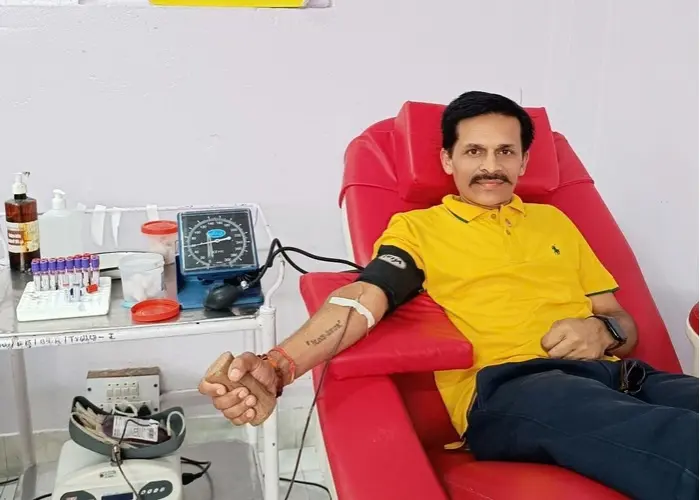
Blood Donor Naresh Sharma with children living with thalassemia
Blood Donor Naresh Sharma with children living with thalassemia — a commitment to compassion, service and support.

How Is Thalassemia Passed from Parents to Children?

Thalassemia is an inherited blood disorder passed from parents to children through genes. It affects the production of hemoglobin, the protein in red blood cells that carries oxygen throughout the body. Reduced hemoglobin production can cause anemia, tiredness and other health problems. Alpha and beta thalassemia are its main genetic types.[1]

Thalassemia cannot be caught through ordinary contact, sitting together or sharing food. A child’s condition is not caused by something the parents did wrong during pregnancy. Many carriers only discover their status after testing. Families deserve understanding, respect and appropriate counseling.[2]

Thalassemia minor, or trait, usually allows a person to lead a healthy life, although mild anemia may occur. Carrier status does not later turn into thalassemia major. Thalassemia major is a serious condition that may require regular blood transfusions. The severity and treatment needs of thalassemia intermedia vary between individuals.[3] [4]

When both parents carry beta thalassemia: probabilities for each pregnancy
ProbabilityPossible outcome for the child
25%Unaffected by the relevant beta-thalassemia gene changes and not a carrier.
50%A carrier of beta thalassemia, also called thalassemia trait.
25%Affected by beta thalassemia; severity depends on the inherited gene changes.

These probabilities apply independently to each pregnancy. They do not predict a fixed sequence of outcomes in a family with four children. Alpha thalassemia follows a different, more complex inheritance pattern.[2]

Recognizing Symptoms and Getting the Right Tests

Symptoms of severe beta thalassemia may begin a few months after birth. They can include pale skin, marked tiredness, weakness, breathlessness, a rapid heartbeat and yellowing of the eyes. Children may grow more slowly, and some patients develop changes in bone growth. These symptoms call for medical assessment.[5]

A blood sample in a test tube for laboratory testing
Blood sample testing forms part of the process of diagnosing thalassemia and identifying carriers.

Doctors may recommend a complete blood count (CBC), specialized hemoglobin testing such as HPLC, and genetic testing when needed. A low hemoglobin result alone does not establish a diagnosis of thalassemia. Accurate interpretation of reports and confirmation at a specialist center are important, particularly in complex cases.[6]

Voluntary carrier screening can be useful before planning a family. If both partners are carriers, genetic counseling can help them understand the risks and available choices. During pregnancy, early specialist advice and appropriate prenatal testing may be discussed. Decisions should respect informed consent, privacy and each family’s circumstances.[3]

Healthcare professionals examining a sample in a laboratory
Laboratory investigations and qualified medical advice help explain test results and treatment needs.

Why Regular Transfusions and Medicines Matter

Regular red blood cell transfusions, usually using packed red blood cells (PRBCs), are an important part of care for transfusion-dependent thalassemia. The timing and amount are determined by the patient’s clinical needs. Many patients require this support over the long term, sometimes throughout life.[6]

Repeated transfusions can cause excess iron to accumulate in the body, increasing the risk of organ damage. Doctors use iron chelation therapy to help control this buildup. Taking prescribed medicines consistently, attending investigations and receiving ongoing medical supervision are essential parts of care. People with thalassemia minor or trait generally do not need regular transfusions.[4]

Bone Marrow Transplantation and Donor Matching

For suitable patients, a bone marrow or hematopoietic stem cell transplant can offer the possibility of a cure. Donor selection involves HLA tissue matching and specialist assessment beyond blood group compatibility. The team considers the patient’s age, health and possible complications. Transplantation can be complex and expensive, and suitability must be assessed individually.[6] [7]

Gene-based treatment options have also been developed. In the United States, gene therapy has been approved for some eligible patients with beta thalassemia. Availability, cost and an individual patient’s eligibility in India should be clarified with the relevant specialist center.[4]

Why Voluntary Blood Donation Matters for Thalassemia

For families supporting a patient who needs repeated transfusions, finding suitable blood on time can be a continuing concern. Regular voluntary donors and donation camps working with authorized blood centers can help meet this need. The blood center provides an appropriate blood component after testing and the required compatibility checks.[8]

A blood donation camp organized for children living with thalassemia
A blood donation camp organized to support children living with thalassemia.

Blood donors, camp organizers, doctors, technicians and social workers all contribute to this effort. Listening to families, connecting them with treatment centers and helping when support is needed are equally valuable. The blood center should confirm each donor’s eligibility and the appropriate interval between donations.

Blood donation celebrates our shared humanity. A commitment to supporting a child’s ongoing treatment can make it a lasting value in our lives.

RAKTDAAN’s Vision — A Thalassemia-Free India

RAKTDAAN aims to advance the vision of a Thalassemia-Free India through awareness, voluntary screening and regular donor support. Practical steps include sharing accessible information in schools, colleges and communities, helping people find qualified testing and counseling services, and connecting consenting, eligible donors with blood centers.

Children’s education, confidence and their families’ emotional needs also deserve attention. Their dignity and privacy must be respected. Through our platforms, including Sankalp Seva, Himrang and RAKTDAAN, we can encourage responsible discussion and inspire sustained community service.

Register as a Blood DonorRequest Blood Assistance

A blood donor in every home.
Join the commitment to a Thalassemia-Free India.
Medical Sources

[1] CDC — Understanding thalassemia and its types

[2] NHS — Causes and inheritance

[3] NHS — Thalassemia carriers

[4] CDC — Treatment and transfusion-related care

[5] NHS — Symptoms

[6] National Health Mission, India — Guidelines for the prevention and care of hemoglobin disorders

[7] NHS — Transfusions, chelation and stem cell transplantation

[8] CDC — Selecting appropriate red blood cell products

What is thalassemia, and why does blood donation matter?

Understand thalassemia, its inheritance, symptoms and treatment, and how voluntary blood donors can support affected children and families.

Thalassemia is an inherited blood disorder that affects hemoglobin production.

Carrier screening and genetic counseling help families make informed decisions.

Treatment may include regular transfusions, iron chelation and specialist care.

Join RAKTDAAN’s commitment to awareness and a Thalassemia-Free India.


Leave a Reply Cancel reply

Your email address will not be published. Required fields are marked *

Search

Recent Posts

  • Blood Donation Awareness Event – RAKTDAAN
    Three Decades of Blood Donation: Naresh Sharma’s Journey of Service

    November 6, 2026

  • Doctor discussing a blood-test report with a mother and daughter during a thalassemia screening consultation,
    Thalassemia Screening: Early Testing, Informed Families

    November 5, 2026

  • A young girl with a cannula in her hand talking to a doctor in a thalassemia care ward,
    What Is Thalassemia? Causes, Symptoms, Treatment and the Importance of Blood Donation

    November 5, 2026

  • Awareness (1)
  • Blood Donation Awareness (8)
  • Inspirational Stories (1)
  • Inspiring Biographies (2)
  • RAKTDAAN (2)
  • Regular Blood Donation (1)
  • Screening (1)
  • Thalassemia (3)

Categories

Popular Posts

Aini Taki Taloh: Four Decades of Compassion, Blood Donation and Service to Humanity November 1, 2026
FBDOI: 22 Years of Strengthening India’s Voluntary Blood Donation Movement November 4, 2026
Apurba Ghosh: Five Decades of Saving Lives and Inspiring Blood Donors October 28, 2026

More Stories That Inspire

Explore inspiring blood donor stories, useful awareness articles, and acts of service that encourage us to come forward and help save lives.

Blood Donation Awareness Event – RAKTDAAN
Three Decades of Blood Donation: Naresh Sharma’s Journey of Service

From his first donation three decades ago to his 129th at Mithila Meet 2026, Naresh Sharma’s story follows the volunteers, families and community organisations that shaped his journey.

↗
Doctor discussing a blood-test report with a mother and daughter during a thalassemia screening consultation,
Thalassemia Screening: Early Testing, Informed Families

Understand thalassemia screening for children and adults, the role of CBC and HPLC, and why carrier detection and genetic counselling matter for informed family decisions.

↗
A young girl with a cannula in her hand talking to a doctor in a thalassemia care ward,
What Is Thalassemia? Causes, Symptoms, Treatment and the Importance of Blood Donation

Thalassemia is an inherited blood disorder affecting hemoglobin production. Explore its causes, symptoms, screening and treatment, and discover how regular voluntary blood donation can support children and families living with…

↗

Stay Connected. Save Lives.

Get updates on camps, urgent needs, donor stories and awareness.


    Follow Us :

    The RAKTDAAN Initiative

    LOGO

    RAKTDAAN.app is a voluntary blood donation initiative dedicated to connecting donors, supporting patients, and promoting lifesaving awareness across India.

    RAKTDAAN: SAKSHAT JEEVANDAAN

    Committed to the vision of a Thalassemia-Free India through awareness, screening, and community support.

    admin@raktdaan.app
    RAKTDAAN , India

    Quick Links

    • About Us
    • Blood Usage Stats
    • Eligibility
    • Request Blood
    • Become a Donor

    Resources

    • FAQs
    • Blood Facts
    • Volunteer with Us
    • Blog & Stories
    • Terms & Conditions
    • Privacy Policy

    Copyright © 2025 RAKTDAAN.APP. All rights reserved.

    🩸 RAKTDAAN Blood Centre Network

    FEATURED CITIES

    Blood banks in Shimla Blood banks in Chandigarh Blood banks in Delhi Blood banks in Lucknow Blood banks in Noida Blood banks in Gurugram Blood banks in Jaipur Blood banks in Ahmedabad Blood banks in Surat Blood banks in Mumbai Blood banks in Pune Blood banks in Bengaluru Blood banks in Chennai Blood banks in Hyderabad Blood banks in Kolkata Blood banks in Bhopal Blood banks in Indore Blood banks in Guwahati

    NORTH INDIA

    Chandigarh Delhi Haryana Himachal Pradesh Jammu and Kashmir Ladakh Punjab Uttar Pradesh Uttarakhand

    SOUTH INDIA

    Andhra Pradesh Karnataka Kerala Lakshadweep Puducherry Tamil Nadu Telangana

    WEST INDIA

    Dadra and Nagar Haveli and Daman and Diu Goa Gujarat Maharashtra Rajasthan

    EAST INDIA

    Andaman and Nicobar Islands Bihar Jharkhand Odisha West Bengal

    CENTRAL INDIA

    Chhattisgarh Madhya Pradesh

    NORTH EAST INDIA

    Arunachal Pradesh Assam Manipur Meghalaya Mizoram Nagaland Sikkim Tripura

    Blood center information: RAKTDAAN Blood Center Directory (source shown there: eRaktKosh). Select the relevant state and district in the directory. Verify stock, contact details and operating hours directly with the blood centre before travelling.