
RAKTDAAN.APP · INSPIRATIONAL STORIES
Three Decades of Blood Donation
Naresh Sharma’s Journey of Service
Centurion Blood Donor · Writer · Community Volunteer
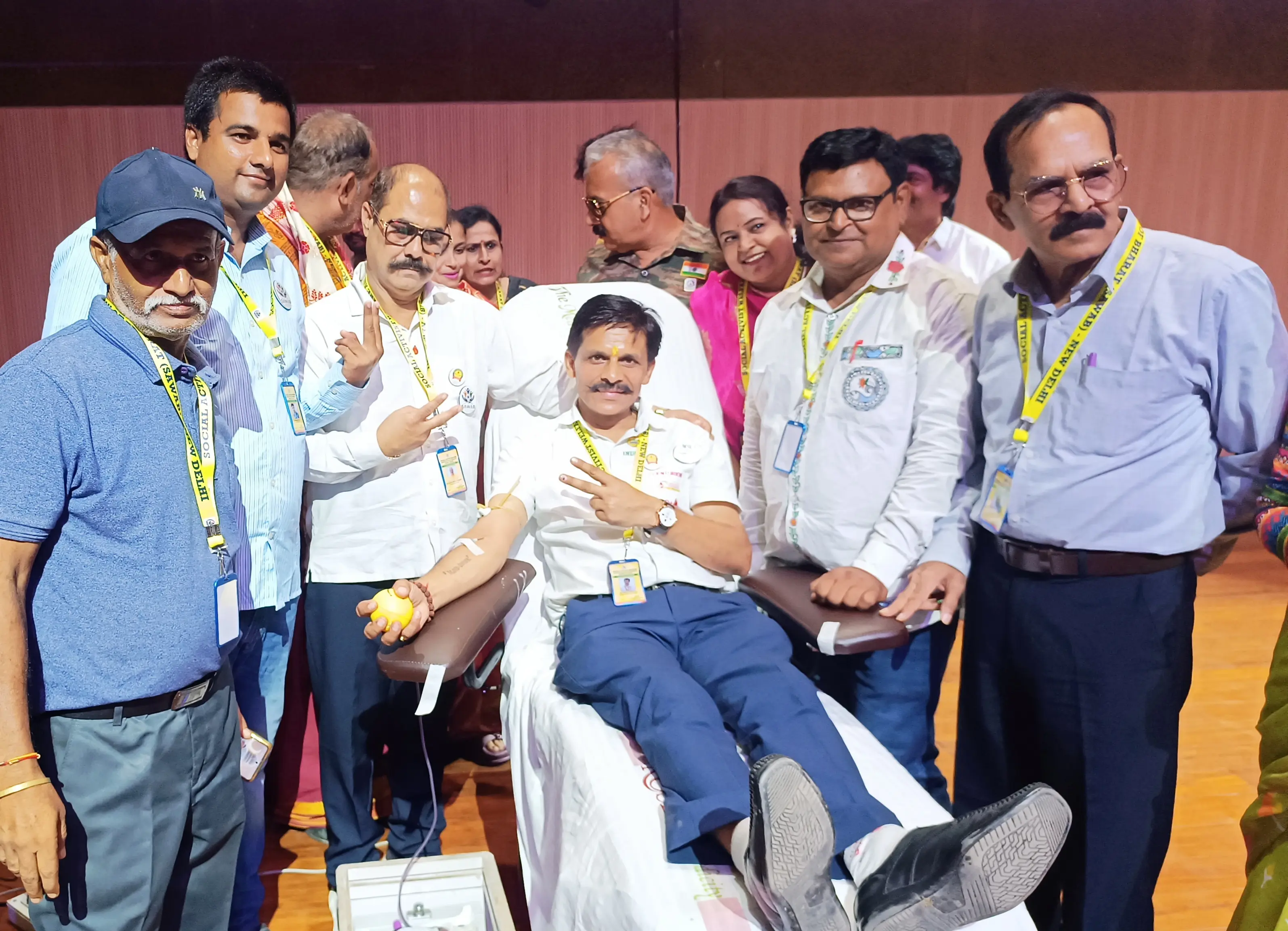
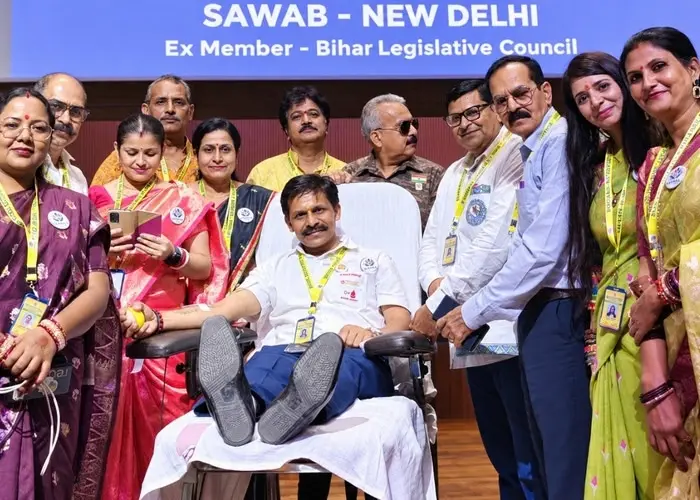
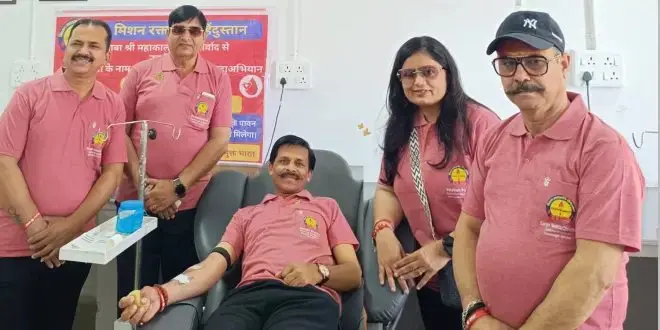
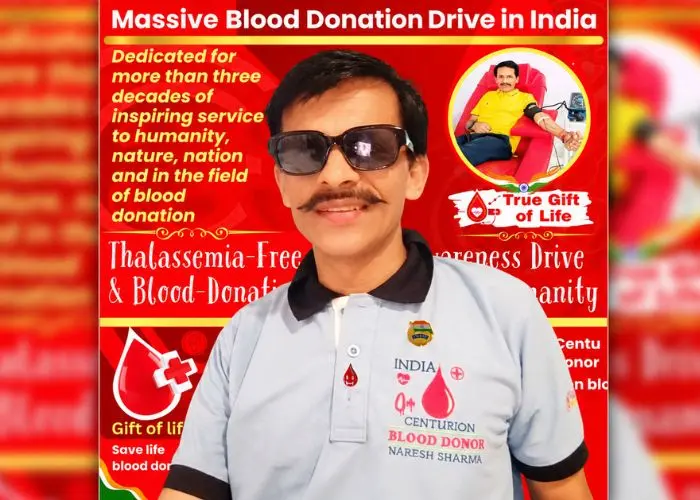
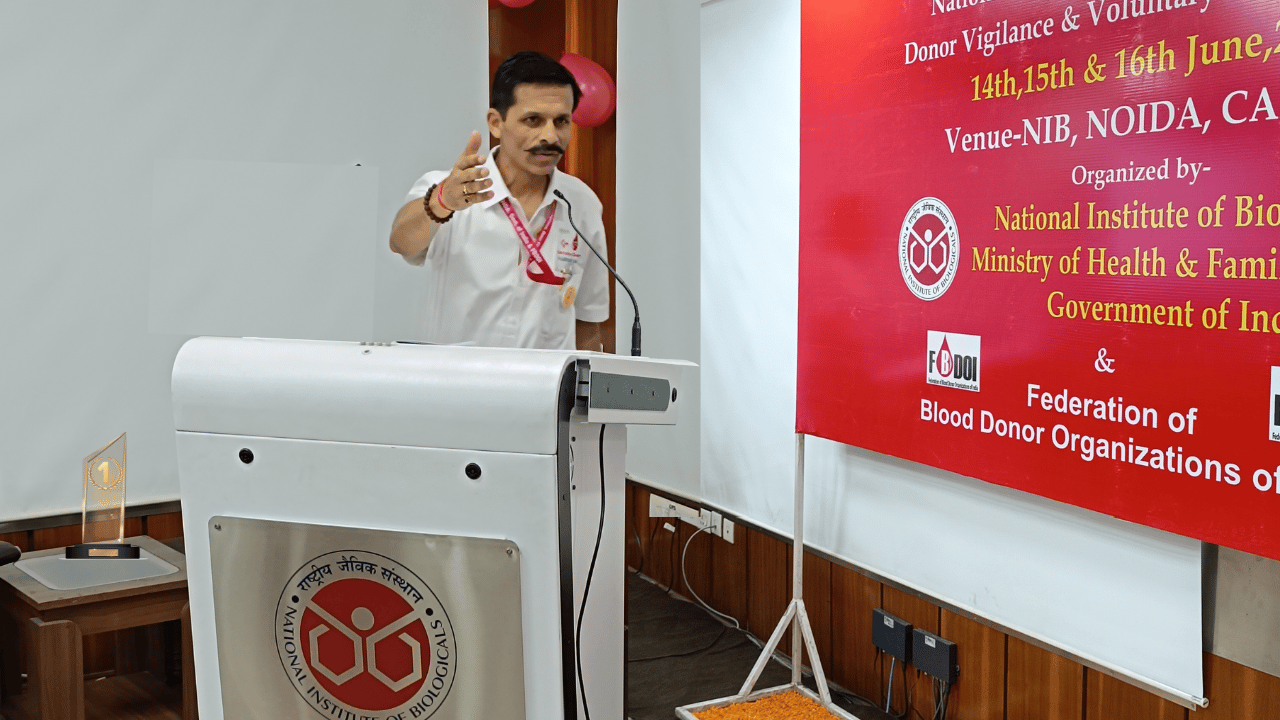
On 5 September 2026, centurion blood donor Naresh Sharma of Himachal Pradesh made his 129th voluntary blood donation at Mithila Meet 2026 in Darbhanga, Bihar. The camp, organised by the Social Activist Welfare Association of Bharat (SAWAB), brought together donors and community volunteers from several states. Darbhanga marked a milestone in a journey that began three decades ago. Its roots lie in a small village in the hills of Shimla district.
CHAPTER 01
The First Step in Majholi
Majholi is a small village in Sarivan Gram Panchayat, in Theog tehsil of Shimla district, Himachal Pradesh. It is where Naresh Sharma grew up. His family, teachers and neighbours taught him what it means to stand beside others through difficult times. He first gave blood three decades ago. He had no long-term plan at the time. An opportunity to help arose, and he took it.
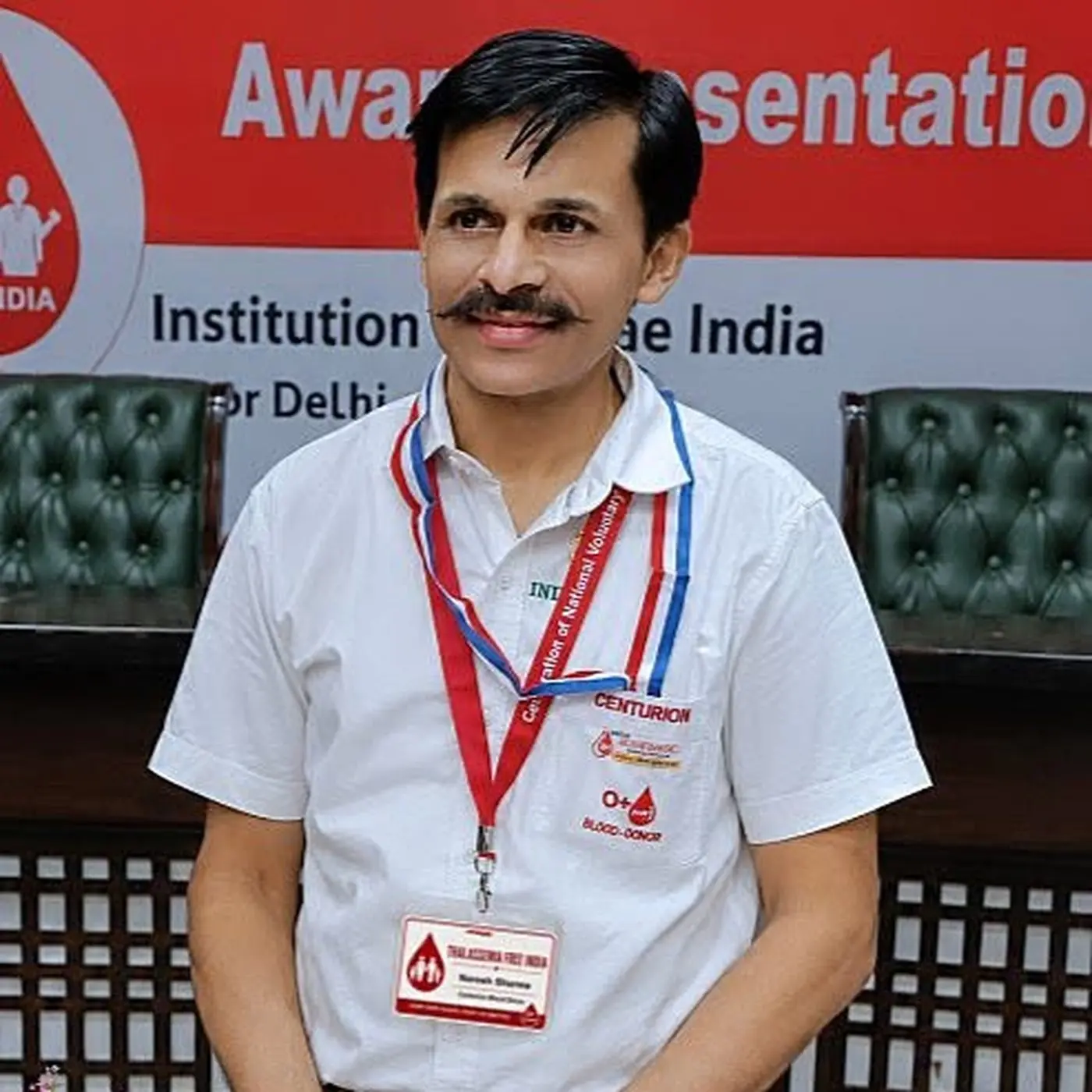
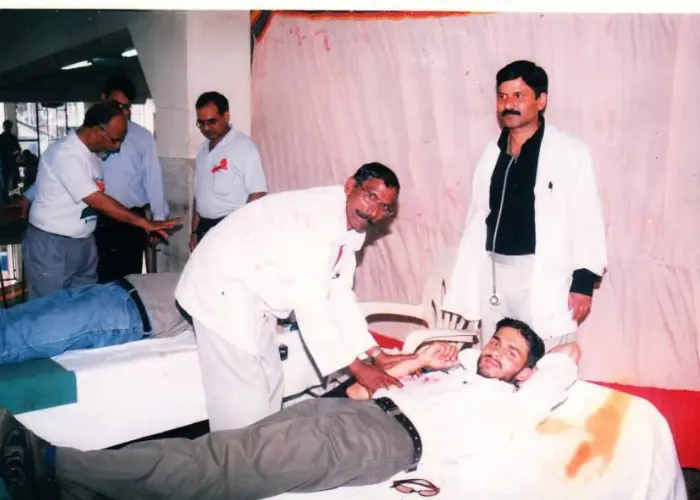
The first donation took courage. Keeping it up year after year took patience and discipline. Over time, Sharma found another way to help. When he heard that someone needed blood, he reached out to donors and volunteers. Sometimes he could donate himself. At other times, he could put a worried family in touch with someone willing to help.
Work took him to Shimla, Solan, Parwanoo, Chandigarh, Zirakpur, Jalandhar and Aurangabad in Maharashtra. He continued volunteering as he moved between cities with different languages and cultures. The people he met in each place helped him understand local needs and the work already being done to address them.
CHAPTER 02
From the Hills to the Plains
The journey that began in Majholi reached districts and states beyond Himachal Pradesh. Sharma took part in donation camps and spoke at awareness programmes. Working with local organisations, donor groups and volunteers showed him how needs vary from one district to the next. In one place, the priority might be making sure people know where and when a camp will take place. In another, volunteers may need to stay in touch with regular donors between camps.
By his own account, he has participated in blood donation, community service or awareness programmes in about 21–22 states. He has been in contact with or worked alongside more than 2,000 organisations involved in these areas. He has attended hundreds of camps and has also donated platelets when needed.


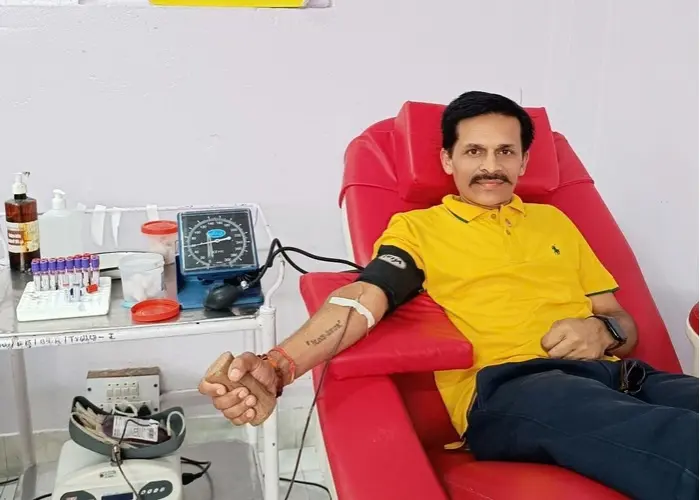
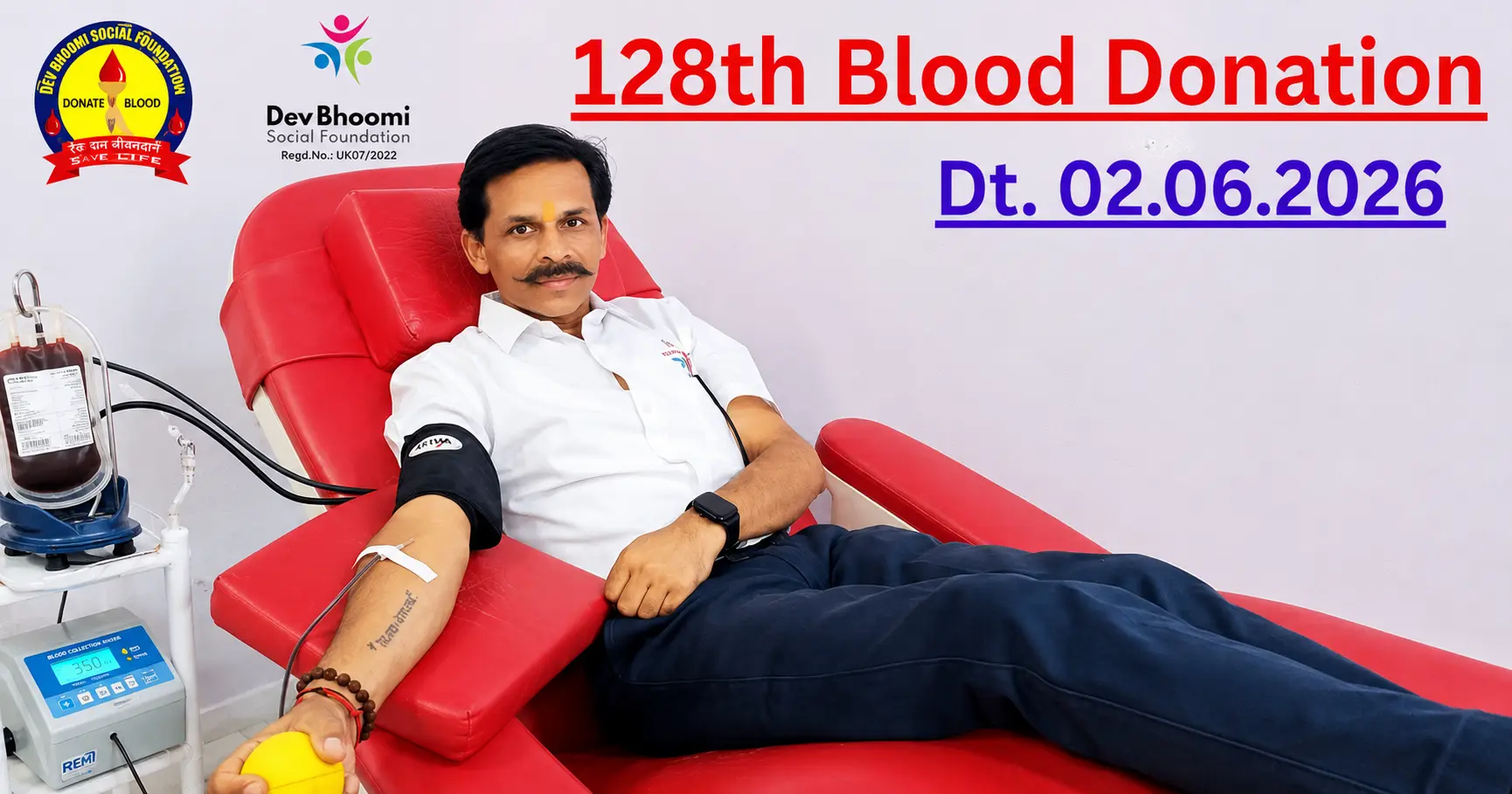
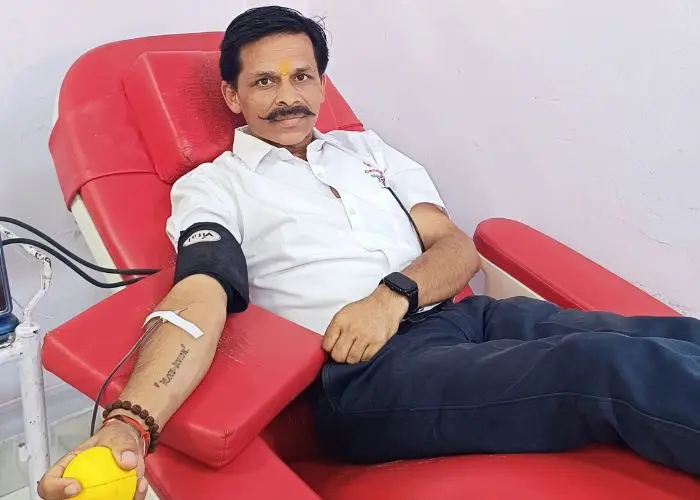
Three stops in 2026 trace part of that journey. On 28 February, he gave blood in Ujjain, Madhya Pradesh. On 2 June, he made his 128th donation at Indira Gandhi Medical College and Hospital in Shimla. He made his 129th at Mithila Meet in Darbhanga. The cities differed in language and culture. In each one, people made time to help others in whatever way they could.
CHAPTER 03
The People Behind a Blood Donation Camp
The donor is often the person we see in a photograph from a blood donation camp. Outside the frame, volunteers tell neighbours when and where to come, answer questions from first-time donors and handle the arrangements. Blood centre staff assess donor eligibility and collect the blood. After the camp ends, volunteers stay in touch with donors so they know whom to call when another request comes in.
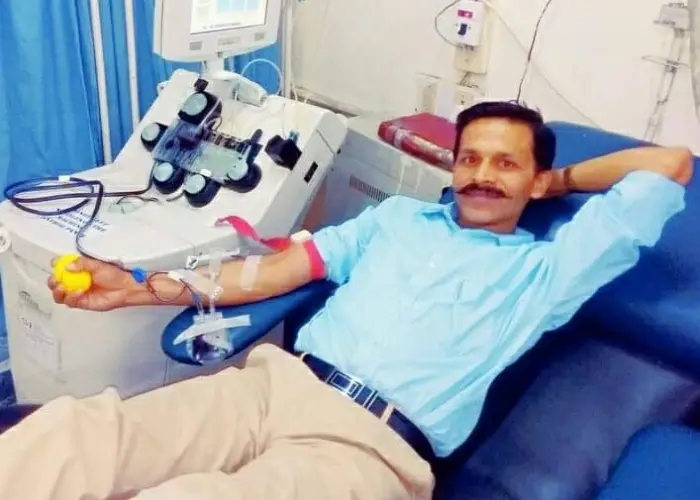
Sharma’s awareness work has included the needs of children living with thalassemia and their families. For families whose children need regular transfusions, finding blood is a recurring concern. He talks about that experience at camps and in conversations with donors. He encourages eligible people to give voluntarily and makes room for first-time donors to ask questions. Taking someone’s fears seriously may be what helps them make that first visit.
His connection with these children and their families deepened over time. He listened to parents’ concerns and helped them get in touch with donors when blood was needed. The trust at the heart of that relationship grew through staying in touch and showing up when families asked for help.
CHAPTER 04
Writing and Public Awareness
Naresh Sharma is a writer. Alongside blood donation and community service, he writes about addiction prevention, patriotism, the environment, health, education and human values. His articles on Himrang describe donation camps and share the experiences of people who work in their communities. A local group reading about how another district organised a camp may find an idea it can use close to home.
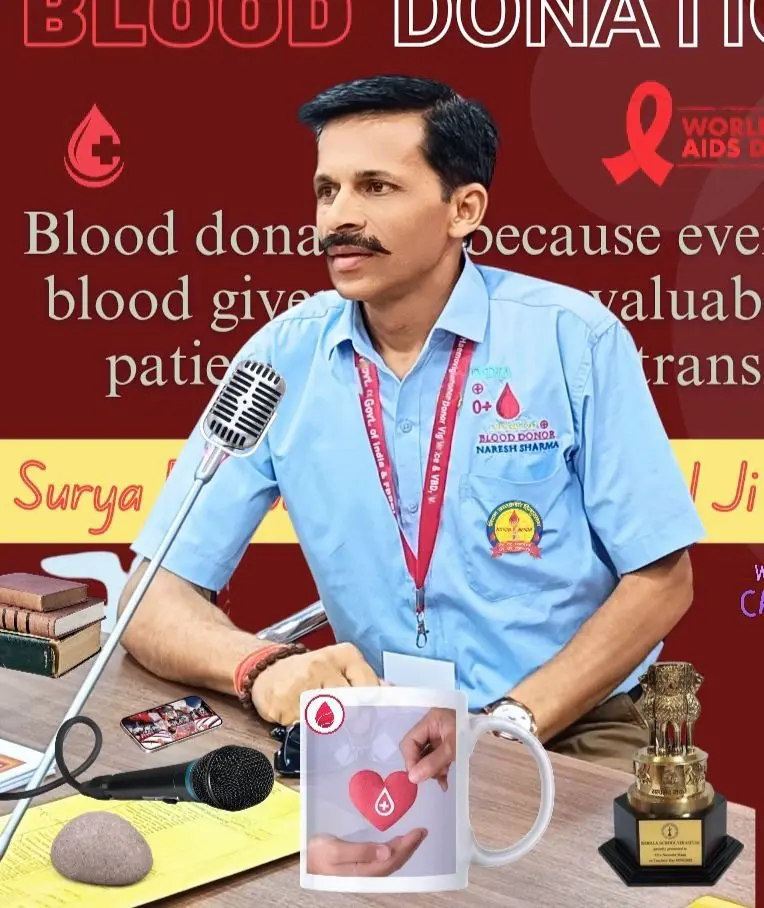
Sharma has carried the same approach into Sankalp Seva and RAKTDAAN.app. The latter shares information about voluntary donation and helps people contact blood donors when they need to. An article can answer a question for someone considering their first donation. A contact can help a family make one less call in its search for blood. These are the practical ways he puts writing and technology to work.
Three Websites and Their Work
Himrang
A news website that covers a range of subjects, including matters of local interest.
Sankalp Seva
A platform dedicated to humanity, the nation and nature, with space for community service and environmental initiatives.
RAKTDAAN.app
A platform for voluntary blood donation information and for helping people get in touch with donors.
CHAPTER 05
Compassion in Everyday Service
In Sharma’s service work, peace and compassion take practical forms: listening patiently to a worried relative, treating a new donor with respect or helping a group in another district organise a camp. A patient waiting at a hospital may speak a different language or come from a place the donor has never visited. What brings them together is one person’s need and another person’s willingness to help.
Tree planting, cleanliness, water conservation and environmental awareness are also among his concerns. He has pledged to donate his eyes, organs and body. He hopes that after his death these gifts may help restore someone’s sight, support a patient’s treatment or contribute to medical education.
Family members, medical staff, local organisations, volunteers and fellow donors have supported this journey over three decades. Sharma’s call for a blood donor in every household brings the story back to where it began. A young person can bring their questions to a blood centre. A family can accompany someone making their first donation. A local group can help arrange a camp. The path from Majholi to Darbhanga grew out of such decisions, repeated over many years.